
Budget 2026: Nature Nowhere, Decline Everywhere

Last night’s Federal Budget was full of the things that usually dominate Australian politics: spin and taxes. The Government wants it remembered as one that rewarded workers and cooled speculative investment in housing. And superficially, that probably makes sense. But while the media panels discussed who will gain or lose a few hundred dollars here and there, and whether property investors are being hard done by, I kept looking for something else: Where is Nature in all this? The answer, unfortunately, is that it barely rated a mention.
Yes, there are some environmental measures in the Budget. The Government has allocated funding for environmental approvals reform, continued drip feeding of threatened species and biodiversity, and further support for the Great Barrier Reef. Ministers will point to these as evidence that the environment remains a priority.
But let’s be honest about what much of this actually is. The big-ticket “environment” item is not investment in restoring ecosystems, protecting threatened species, expanding national parks or supporting Aboriginal-led Caring for Country. It’s funding aimed at speeding up environmental approvals for development projects. That might be good news for mining companies, gas exporters, data centres and major infrastructure proponents. But it’s not the same thing as protecting Nature. In fact, it will make things worse by speeding up environmental destruction.
And meanwhile, the Budget continues billions of dollars in fossil fuel subsidies. The largest of these is the Fuel Tax Credits Scheme, which will cost taxpayers more than $10 billion this financial year alone and rise further over coming years. Much of it flows to major mining and fossil fuel companies through rebates on diesel use. And what makes things worse, is that government spin is hiding the real value of fossil fuel industry support. The Australia Institute estimates fossil fuel subsidies nationally are now worth more than $16 billion a year.
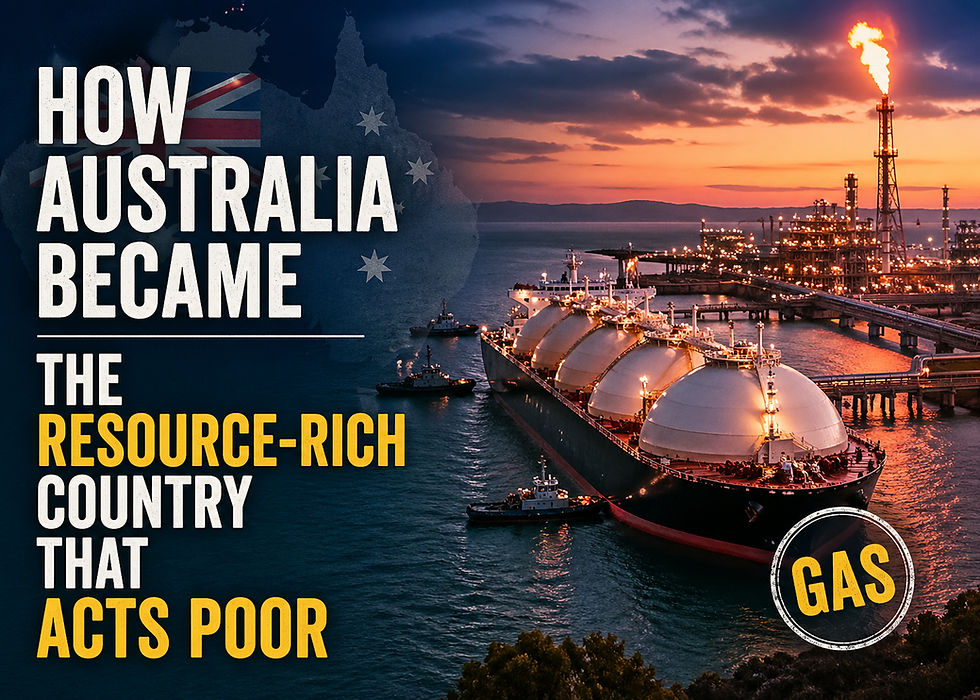
And then there’s the gas industry. One of the most striking things about this Budget isn’t what was announced, but what wasn’t. There was no serious move to increase taxation on multinational gas companies which pump up and export Australia’s gas at enormous profit while Australians continue paying high domestic energy prices and essential services and environmental protection are left lagging. Senator David Pocock has campaigned strongly on this issue, pointing out that we’re getting a terrible deal from our gas resources. Australia is one of the world’s largest gas exporters, yet the public return is astonishingly poor. In most cases, multinational corporations are extracting our resources, exporting them overseas, and paying little or nothing in return.
At the same time, the government claims there’s not enough money for large-scale investment in biodiversity protection, climate adaptation or threatened species recovery. Think about that contradiction. We subsidise diesel use for fossil fuel industries. We continue approving new coal and gas projects. We fund faster environmental approvals. But we don’t meaningfully increase taxes on gas exporters to help fund the protection of the very environment being damaged. That’s not an accident. It’s a political choice.
And this is the deeper problem. Nature in Australia is still treated as a side issue - something to mention on World Environment Day, something for a media release if a few koalas are saved, something to acknowledge symbolically while the real money flows elsewhere.
We’re a wealthy country. We can apparently afford multi-billion-dollar tax concessions, massive defence spending increases and industry subsidies. But when it comes to protecting the natural systems that actually keep us alive - clean water, healthy soils, pollinators, forests, reefs and stable climate systems - suddenly the cupboard is bare.
The really frustrating thing is that this isn’t a fringe issue. Nature underpins the economy itself. Agriculture depends on healthy ecosystems. Tourism depends on landscapes and wildlife. Human health depends on clean air and water. Disaster resilience depends on functioning natural systems. And for Aboriginal people, Caring for Country isn’t a policy option or stakeholder interest. It’s law, obligation, identity and relationship. Yet our annual budget still treats Nature as optional.
The Biodiversity Council has previously pointed out that only a tiny fraction of Commonwealth expenditure goes directly toward protecting biodiversity. You do not need to be a radical environmentalist to see that this is wildly out of step with the scale of the crisis.
The irony is that Australians actually love nature. We celebrate koalas, reefs, gum trees, cockatoos and beaches as part of our national identity. We market them to the world. We put them in tourism campaigns. We name our sporting teams after them. We’re proud of them. But when budget night comes around, Nature disappears beneath changes to tax brackets and property portfolios. And perhaps that tells us something uncomfortable about modern politics.
Australia has become very good at focusing on short-term financial returns and very bad at valuing the living systems that sustain us. Until that changes, we’ll continue to allow and indeed subsidise environmental decline while pretending that modest funding announcements and faster approvals processes are enough. They’re not.



Gregory, another exceptional post. Our government is so cowardly that it hides its pathetic response to gambling advertising reform under a mountain of budget weakness.
Way to go Gregory. If only our Government had the guts to do what’s right for Australia. Especially Labor! It’s so disappointing.
Thank you Gregory.
I will write to Marray Watt quoting uour words.Here in Adelside state govt is murdering 600 trees in Adelsude Parklsnds for a golf course development.Many community members are outraged.
You’re on point as always Gregory. So sad and frustrating that our government doesn’t care about what really sustains Australia.😢