
What's Degrowth? And Why If We Don't Choose It, Collapse Will Choose Us

I’ve been thinking about a word that can make otherwise reasonable people flinch: degrowth. Say it at a dinner party and you can feel the temperature change. Someone will hear “recession”. Someone else will hear “austerity”. Another will think you mean “hair shirts and cold showers”. A politician will hear “career-ending”.
But degrowth is none of those things. As heart, it's a simple proposition: you can’t grow the human economy’s physical footprint forever on a finite planet. At some point you hit limits - not theoretical limits, but real ones: a destabilised climate, collapsing ecosystems, exhausted soils, water stress, insurance retreat, supply chain disruption, rising costs, and the slow, grinding realisation that the “normal” we built was never actually stable.
The choice is this: do we manage the downshift deliberately, fairly, and with care. Or do we let it arrive as chaos, scarcity, and political panic?
What degrowth actually means
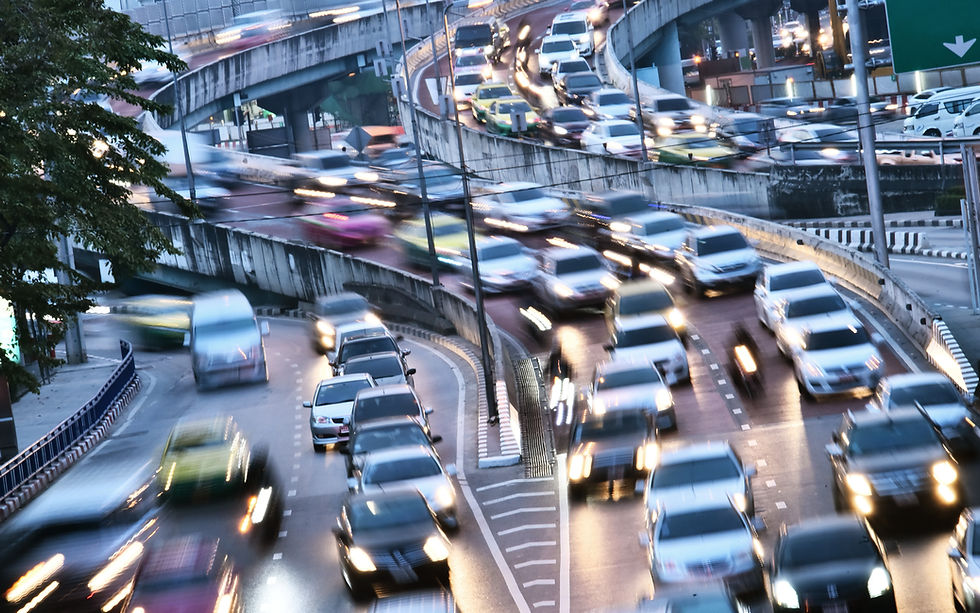
Degrowth says stop treating rising GDP as the definition of success, and start designing an economy around sufficiency, wellbeing, and ecological limits. GDP counts almost anything as “good” so long as money changes hands. Bushfires and rebuilds: growth. Floods and repairs: growth. More traffic jams, more stress, more junk, more hospitals because the air is filthy: growth.
Degrowth asks a different question: what parts of the economy genuinely improve lives, and what parts are simply chewing through energy and materials while degrading Country and communities? Then it makes a straightforward proposal: shrink the high-damage, low-value parts. And strengthen the foundations of a decent life for everyone.
This is where people often get it wrong. Degrowth isn't “everyone tightens belts”. Done properly, it's the opposite of austerity. Austerity cuts services, erodes security, and tells ordinary people to cope while the powerful carry on. Degrowth, if it's to be legitimate, comes with strong public guarantees: housing, health, education, transport, energy basics.
Choose it, or collapse will chos us
Here’s the line I keep coming back to: if we don’t choose degrowth, something like it will happen anyway - just in the ugliest way possible. Call it forced contraction. Call it “collapse”. The label matters less than the pattern: climate disasters multiply, the cost of rebuilding grows, insurance becomes unaffordable or unavailable, supply chains wobble, food prices spike, energy volatility returns, wars break out and governments lurch from one emergency to the next.
That isn’t a planned transition. It’s triage by market power and the elite. The wealthy buy protection; everyone else carries the risk.
This is why degrowth can be understood as “managing descent”. Not because we’re conceding defeat, but because we are refusing the fantasy that perpetual expansion is compatible with a liveable world.
What degrowth could actually look like
If degrowth stays abstract, it will stay unpopular. So here’s what it can look like as real policy and culture. It starts by cutting luxury carbon and waste first - not punishing the basics of life. We stop pretending all consumption is equally important. We put limits on the most damaging forms of excess: private jets, oversized vehicles, obscene energy waste, planned obsolescence, and an advertising industry built to make us feel inadequate so we buy more.
And at the same time, we expand what makes a lower-consumption life feel not only possible, but better: good public transport; cool, efficient homes; reliable local services; secure housing; reliable public systems; more time; less stress.
Degrowth, at its best, is not “less”. It’s “less rubbish and more life”.
Why this matters for Australia
Australia's living the tension between what we could be and what we are. We have extraordinary renewable resources. But we remain deeply tied - economically and politically - to exporting fossil fuels and pretending those emissions are someone else’s problem. We talk about resilience while approving developments in places that burn or flood. We talk about “cost of living” while ignoring that climate disruption is a major cost-of-living accelerator - for food, insurance, health, housing, ... for everything.
Degrowth isn't an excuse to slow down the clean energy transition. Quite the opposite. We need rapid electrification and renewables, because fossil fuels are the fastest way to worsen the risks we’re trying to manage.
But degrowth adds a harder, necessary truth: even with clean energy, an economy obsessed with constant expansion will keep intensifying pressure on land, minerals, ecosystems, and communities. It will keep demanding more, mining more, clearing more, consuming more - and calling it success. Degrowth says: stop. Not everything should grow.
So why the resistance? Because the growth story isn't just economics - it’s identity and politics. It’s how people have been taught to judge whether they’re safe. If growth stalls, people fear unemployment, shrinking services, and falling living standards. They’re not wrong to fear that under current settings. That’s why degrowth must be paired with security and guarantees. You don’t sell “less consumption” in a society where people already feel stretched. You build a society where people feel held, and then you cut the nonsense that’s burning the future.
So degrowth isn't a slogan for the fringe. It is a sober, grown-up response to a world that no longer tolerates business as usual. It says: shrink what harms, grow what heals, and measure success by wellbeing rather than GDP. And it offers us a choice that won’t stay open forever: planned change, rather than forced change. I know which one I’d rather live through.


Hi Pern, you're argument is based on an assertion that humans are all animals, - sure, some are animalistic, perhaps those will not understand collapse, but many are not simply animalistic and can perceive coming catastrophe and the need to act before imminent death.
It is up to you whether you can think deeply enough to think, and then act.
Greg, I fear that, while you are right about the impossibility of endless growth, you are wrong about managed decline.
We humans are animals, and like all animals, our population will increase with abundance and decrease/crash with scarcity. Very few societies have managed their way through a decline—none that I can think of, actually.
Also, a declining society is easy pickings for societies that aren’t declining, and while it would be nice to be able to pinpoint the best time to start a managed decline, like the short seller on the stock market, the world will be able to maintain a seeming abundance for much longer than you can hold out on your ideas of managed decline; even if you…