
Fixing Corporate Capture and Climate Change

The Fossil Fuel Industry had 1,600 official delegates at COP30 in Brazil
When I first saw that number, I had to read it twice. More than 1,600 fossil fuel industry delegates had official access at COP30 in Belém, Brazil - the UN climate talks held on the edge of the Amazon rainforest.
This was the conference that was meant to deliver on the Paris Agreement at its ten-year mark. No wonder it failed. The corridors were crowded with people whose livelihoods depend on extracting and burning more coal, oil and gas.
One in every 25 people inside COP30 was a fossil fuel lobbyist. Only Brazil itself had a larger single delegation than the fossil fuel industry. Fossil fuel delegates outnumbered the Philippines’ official delegation by almost fifty to one, and they had far more passes than all the delegates from the ten most climate-vulnerable nations combined.
If we described any other process this way, we’d laugh at the conflict of interest. Imagine a Royal Commission into tobacco harm where Big Tobacco turned up as one of the largest blocs in the room. Or a peace conference where arms dealers had more seats at the table than the communities living through the war. Yet for three decades of climate negotiations, COPs have normalised something very similar and given it a polite name: “stakeholder engagement”.
“Corporate capture” is a more honest description. It’s what happens when an institution that is supposed to protect people and Country becomes structurally dependent on, and comfortable for, the corporations whose business model created the crisis in the first place.
There’s something especially jarring about this happening in Belém. The symbolism is hard to miss: Indigenous peoples of the rainforests were kept outside the venue, while inside, the agenda was bent towards new drilling, digging, pipelines and profits.
As an Australian, it feels grimly familiar. Our government talks about climate leadership while approving new coal and gas and celebrating record export earnings. We tell ourselves we’re helping the world with “energy security”. But to the atmosphere, it’s just more CO₂.
On paper, COP30 was supposed to be about keeping 1.5°C within reach and protecting the most vulnerable. In practice, it was a place where the fossil fuel industry watered down anything that smelt like a phase-out of coal, oil and gas. There was no mention of “fossil fuels” in the final text!
None of this means that multilateral climate talks are pointless. But we should drop the pretence that they’re somehow insulated from power and money. Who’s in the room matters. Who they answer to matters. And when over 1,600 fossil fuel delegates turn up at a climate conference in the Amazon, that tells us whose hands are still on the steering wheel.
So where does that leave the rest of us - in Lismore, in Western Sydney, in farming and remote Aboriginal communities where floods, fires and heatwaves are already biting?
For me, it points to something very specific Australia can do: change the rules that govern our corporations. Right now, company directors are required to act in the interests of their corporations and shareholders. That’s the legal logic that sends fossil fuel lobbyists to COP to weaken climate action. What they’re doing is immoral, but it is lawful.
We could rewrite that law.
Former corporate lawyer Robert Hinkley has spent years arguing for a simple change to the Corporations Act so that directors must consider not just shareholders, but the impacts on people, communities and the environment. If that duty were written into Australian law, Australia’s corporate delegates at COPs would be required to act in the interests of Country and community too - not just profit. It wouldn’t be a problem that they were in the room.
If you’re interested in how that could work, I encourage you to visit Robert Hinkley’s website and follow his blog at The Code for Corporate Citizenship. Bob’s work shows that corporate capture isn’t inevitable. It’s a political and legal choice - and one we still have time to change.
Because in the end, if you’re addicted to something that’s killing you, you don’t ask your dealer to write the rehab plan. You change the rules, you stop letting dealers call the shots in the first place, and you get serious about getting well.


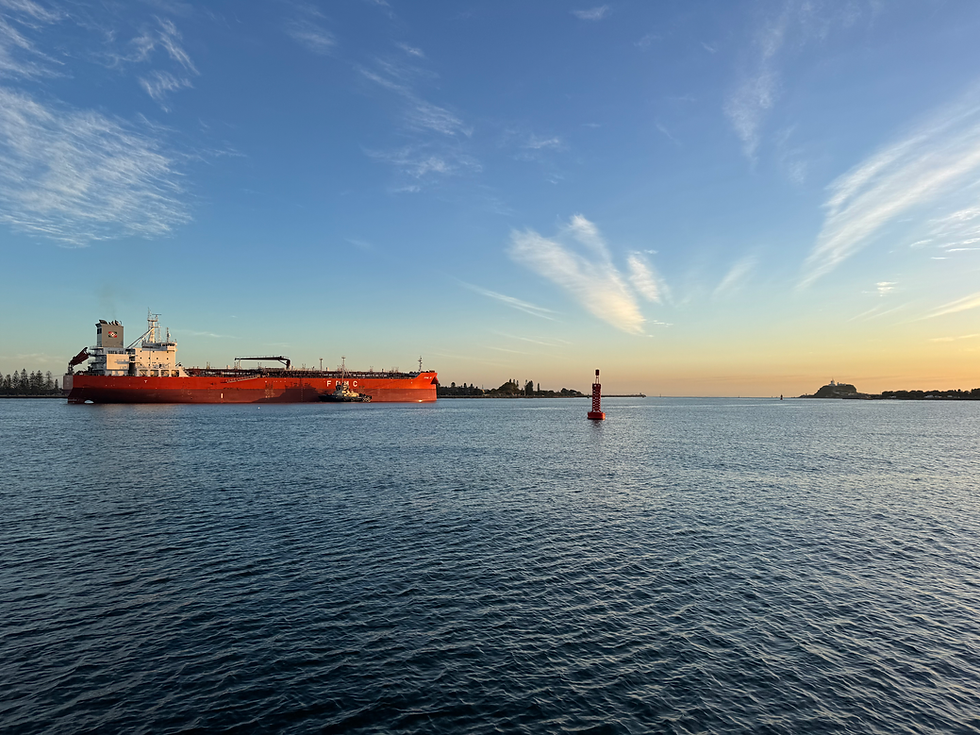

The whole exercise of these talk fests at COP are exercises in hypocrisy!
It comes down to this.
Democracy doesn't work when corporations have the power to obstruct legislation that would prohibit them from inflicting severe damage on the environment and other elements of the public interest.
The emission of great quantities of greenhouse gases is still legal (after 30 COPs). It's time to change corporate governance so that the duty of directors to act in their company's best interests is amended to provide: WITHOUT CAUSING SEVERE DAMAGE TO THE ENVIRONMENT.
Corporations should have a duty to protect the environment from severe harm--not be encouraged to continue harming it as they are now under current law. After all, they wouldn't exist if the law didn't give them that right and allow them t…
Corporate capture has a healthy future in Australia while the major parties, particularly Labor, work together to ensure 'stability', 'continuity', or whatever else they say to not threaten power and wealth.
To hope that independent members, who generally represent wealthy electorates, would go near a change in a law which would potentially hurt many of their constituents wealth, is also a long shot.
Significant change is only being proposed by the Greens who are effectively being labelled as extreme blockers and are not gaining in popularity.
We should not expect anything to change....except for storms, floods, fires and droughts to get worse!