
The Wallabies We're Losing
- Gregory Andrews

- Jul 17
- 3 min read
For #FloraAndFaunaFriday this week, let’s talk about the Wallabies. Not Australia's rugby players. I'm talking about the small, cute, fury ones. Most people think a wallaby is simply a small kangaroo. That's broadly true, although the distinction isn't as scientifically tidy as you'd imagine. “Wallaby” is not a formal taxonomic category. It's a common name generally given to the smaller and medium-sized members of the macropod family, while “kangaroo” is reserved for its largest members.
But that difference in size has enormous consequences. Australia's larger kangaroos are generally widespread, mobile, able to use a range of open habitats and capable of fending off predators. Our wallabies are far more particular. Some depend on rocky ranges and escarpments. Others need dense woodland or particular patches of arid-country vegetation. Their smaller ranges and more specialised habitats make them especially vulnerable when Country is cleared, fragmented, overgrazed, or affected by climate change and catastrophic bushfires.
Many smaller wallabies also fall within, or close to, Australia’s notorious “critical weight range”: mammals weighing roughly 35 grams to 5.5 kilograms that are particularly devastated by foxes and feral cats. Some of our larger wallabies might sit above that threshold, but their joeys and smaller relatives still remain vulnerable. Research continues to find that Australia’s threatened macropods are concentrated overwhelmingly among the smaller species, while the bigger kangaroos remain more resilient.
When I was Australia’s Threatened Species Commissioner, I regularly warned that we had already lost eight kinds of wallaby to extinction, with another 16 at risk. Eight. Gone forever.
Among the wallabies I've been fortunate enough to meet are the warru - black-footed rock-wallabies being protected by Anangu rangers on the APY Lands. Warru were once common across the rocky ranges of Central Australia, but now they only survive in a couple of small areas, including near Pukatja - formerly Ernabella. The Anangu-led recovery program there combines Aboriginal and contemporary science, predator control, monitoring and reintroduction. It's precisely what effective conservation should look like.

I've also met bridled nail-tail wallabies and mala hare-wallabies at Australian Wildlife Conservancy sanctuaries. The bridled nail-tail was once thought extinct until it was rediscovered in Queensland. Mala have disappeared entirely from the Australian mainland outside fenced sanctuaries and islands, largely because of cats and foxes. They survive today only because organisations like Australian Wildlife Conservancy refuse to accept their extinction.
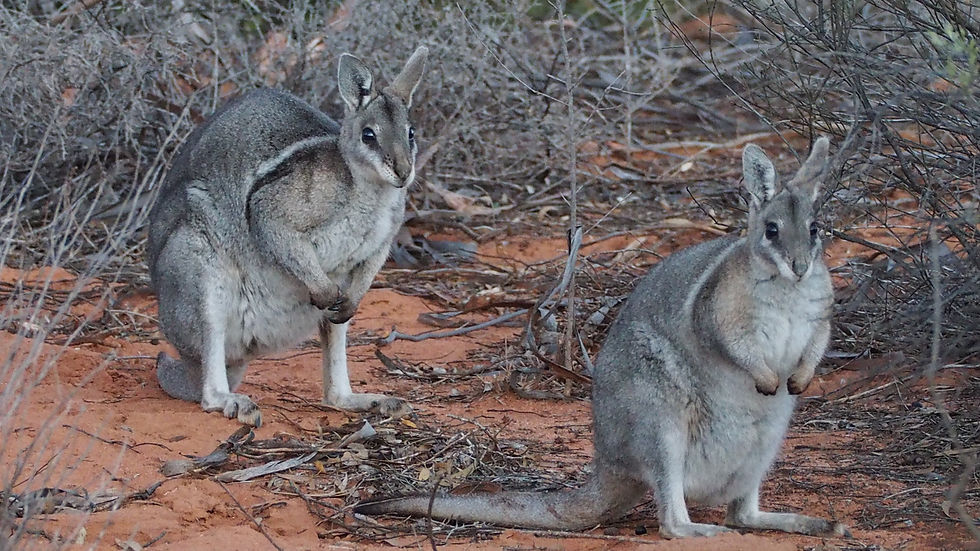
Then there are the gorgeous yellow-footed rock-wallabies, including Lilly, whose extraordinary surrogate-mother story I've written about previously. They look as though somebody painted them for a children’s book: striped tails, orange feet and exquisitely marked faces. Yet even animals this beautiful and distinctive can quietly disappear if we don't protect their habitat and control invasive predators.

Closer to home, on Ngunnawal Country where I live and D’harawal Country where I come from, we have red-necked wallabies - and no, they're not necessarily Pauline Hanson supporters - and the dark, secretive black wallaby. Black wallabies prefer forest, heath and dense undergrowth, where their dark fur helps them melt into the vegetation.

During the 2020 bushfires, an elderly, almost blind black wallaby began spending time in our vegetable garden. Perhaps the greenery and water made it a refuge when the surrounding landscape had become too hot and dry. He used to sit quietly among the tomatoes, looking back at us through clouded eyes.
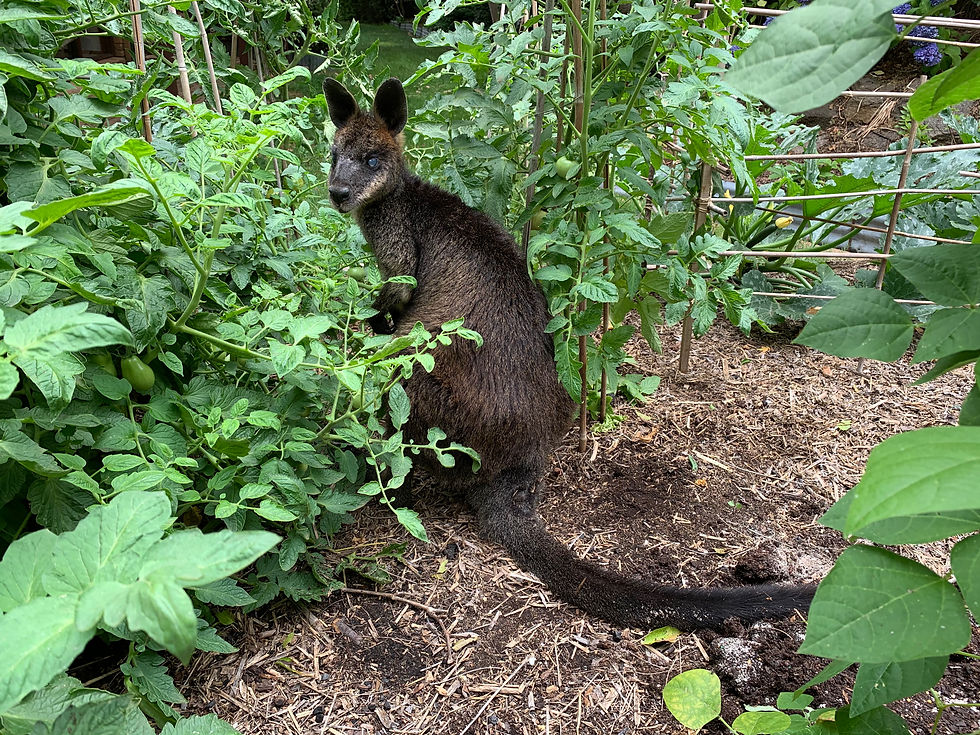
That old wallaby made the extinction crisis intensely personal. These are not merely names on government lists. They're our neighbours and kin. They're fellow inhabitants of Country. They have their own lives, needs and relationships with the places that sustain them.
Australia has even named our national rugby union team after the Wallabies. But, as I said when I was Threatened Species Commissioner, we can't keep naming our sporting teams after our native animals while allowing to become extinct. And extinction isn't happening because Australia lacks money. The federal government allocates less than $50 million a year to saving species. Meanwhile, over $16 billion of tax payers money is spent on fossil-fuel subsidies. These figures may not be perfectly like-for-like, but the contrast tells us everything about our governments' priorities.
The science is clear on how to save wallabies: protect habitat, support Indigenous rangers, control foxes and feral cats, manage fire properly and fund long-term recovery rather than a succession of short-term announcements. Australia can afford to save them. We're simply not yet choosing to.
The Wallabies belong on the rugby field. And Australia's wallabies belong on Country. Neither should become a memory.


Beautiful precious creatures that we have to save!
I'm fortunate enough to have seen a few of these in my local area (Sydney Northern Beaches). Always thrilled to know they're around, even though their once prolific Koala cousins are not.
Unfortunately most people ate self-focused and can't see "the big picture". I blame it on the influence of American "culture", which is totally uncultured and runs counter to the traditional Australian "mateship" ethos. If we extend our focus from ourselves and our families to our communities and the Country in which they flourish and adopt the First Nations' ethos of "Caring for country", Australia could return to the community-focused place in which I was brought up - and which I've tried to cultivate in my children and grandchildren.
"we can't keep naming our sporting teams after our native animals while allowing to become extinct"😢