
Foreign policy should not be exempt from democracy

I spent enough years inside the Department of Foreign Affairs and Trade to recognise the reflex: the minute the general public’s critique of foreign policy comes up, the room tightens. The tone shifts. The language gets colder. And an unspoken rule kicks in: foreign policy is “serious”, therefore it must be insulated from the messiness of the masses.
If you challenged a domestic policy in Australia and the public got loud, no one in the system would say: “Sorry, the citizens are too naive and emotional for this.” Yet in foreign policy we hear it all the time, dressed up as “strategic judgement”, “complexity”, and “national security”.
It's not that diplomacy should be run by opinion poll, or that confidential details belong on talkback radio. It's that the biggest decisions a democracy can make in the world shouldn't be treated as if they sit beyond the reach of democratic consent.
Australia’s democratic double standard
Australia loves to talk about “shared democratic values” with partners and the promotion of democracy among our neighbours. It is a staple of speeches, communiqués, and alliance rhetoric. But the practice at home often looks like this:
the executive and policy elite decide;
parliament is briefed late or in tightly managed ways;
the public is told it's too complex for them and to trust the professionals;
dissent is treated as naive, moralistic, or unserious.
The plain truth is that the public, and even Parliament, is precluded from some of the most consequential foreign policy acts Australia makes.
Take decisions about sending Australians into international armed conflict. A parliamentary inquiry tabled on 31 March 2023 reviewed how Australia makes those decisions and recommended reforms including stronger parliamentary processes and clearer scrutiny of the legal basis. If the most serious action a nation can take, war, isn't clearly anchored in democratic authorisation, then the democratic deficit in foreign policy isn't abstract. It's real.
AUKUS: the mega-decision with mini-democracy
If you want a case study in foreign policy exceptionalism, look at AUKUS. This isn't a marginal policy tweak. It is a multi-decade commitment with extraordinary fiscal, sovereignty, and strategic implications.
Scott Morrison announced it before the country even knew the question existed. Under Labor, the democratic settings have not improved. In November 2025, a “secret” parliamentary committee was established to scrutinise AUKUS, with Labor and the Liberals controlling membership and the crossbench excluded.
You don't even need to be an AUKUS opponent to see the democratic problem. A decision of this magnitude should be accompanied by maximum legitimate contestability: what is the strategic logic, what are the risks, what is the fallback if timelines slip, what happens if US politics shifts again, and how does Australia preserve agency?
A democracy doesn't get stronger by asking its citizens to applaud from behind the glass and ignoring or lecturing them if they don't.
Gaza: when public sentiment becomes “emotion”
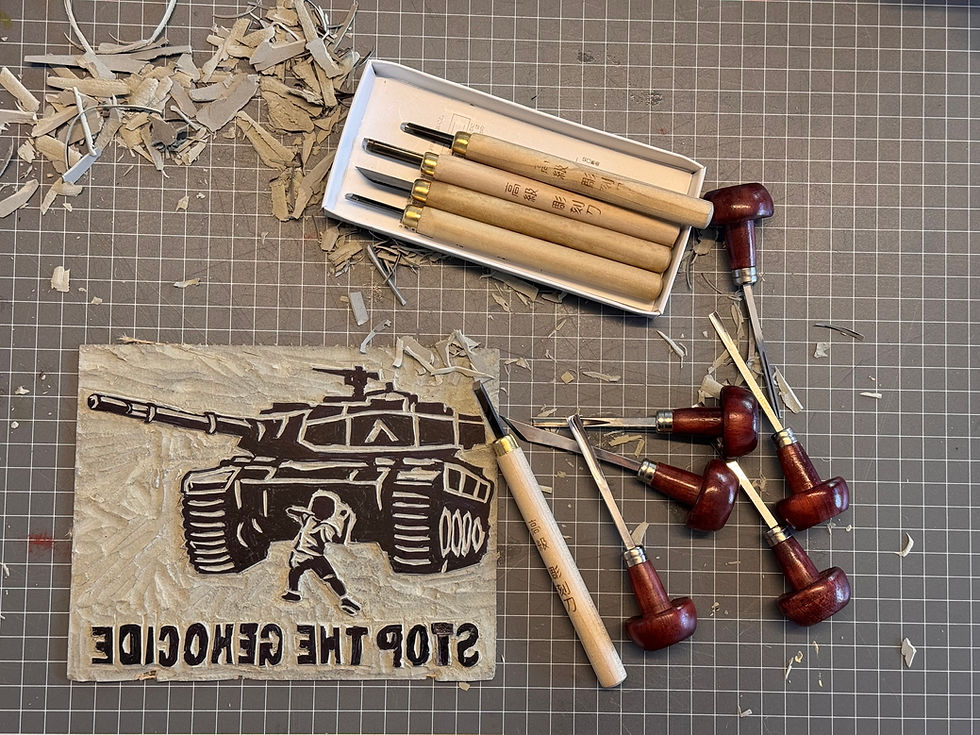
Then there's Gaza, and Australia’s posture towards Israel, including the extraordinary tone-deafness of extending an invitation for an official visit by Isaac Herzog while the horrific catastrophe in Gaza continues to unfold.
It's difficult to deny that a large part of the Australian public wants much stronger action than the government has been comfortable taking. An October 2025 YouGov poll reported majority support for sanctions on Israel and its leaders, and strong support for ending the military assault.
But in foreign policy circles, the moment a moral argument appears, it's treated as a contaminant. “Too emotional.” “Not strategic.” “Lacking judgement.” “Not seeing the complexity.”
Moral reasoning is not the opposite of strategy. It's part of democratic judgement about what Australia stands for and what it will tolerate. If foreign policy is only legitimate when it is stripped of public morality and critique, then it's not democratic foreign policy. It's guild rule.
The alliance problem: dependence on a changing United States
The sharpest and emerging edge of this democratic deficit is Australia’s dependence on the United States, particularly in the age of the Trump regime.
Polling shows over 70% of Australians have little or no confidence in Donald Trump “to do the right thing”. Yet our foreign policy settings assume a continuity and reliability that most of us know no longer exists.
Australians are increasingly calling for our government to confront the reality of a changed global order and a more coercive US posture, rather than pretend that business as usual still holds. Those calls fall largely on deaf and arrogant ears.
The point: democracy isn't a nuisance, it's the source of foreign policy legitimacy
Foreign policy will always require confidentiality at moments, and of course expertise always matters. But secrecy isn't a blank cheque, and expertise is not the same as groupthink. Neither can be a substitute for consent.
A democratic Australian foreign policy would look like this:
stronger, earlier, more public scrutiny of mega-commitments like AUKUS;
clearer parliamentary authorisation for the gravest decisions, especially war;
a political and bureaucratic culture that treats public moral judgement as legitimate input, not naive interference.
Foreign policy should not be exempt from democracy. It is as simple as that.



Here is a petition from Friends of the Earth to Axe AUKUS: https://www.foefnq.org.au/axe-aukus
A true democracy does not invalidate and disempower stakeholders. A true democracy recognises the authority that Australian constituents place in our Parliament, where decisions are made by representation of those stakeholders. The current deficit in democracy has very real consequences for every Australian citizen. This is particularly relevant in decisions relating to war, when it impacts upon sons and daughters within our defence forces, as well as endangering life for civilians on an international scale. Australians have had enough examples of our nation being dragged into US wars with fake agendas. Parliament must decides upon whether or not Australia becomes involved in conflict and this decision should be led by the will of the Australian public. If a jury of…
It's well past time for Australia to loosen (at the very least) or cut (preferable) the ties with the Untied States, which is becoming evr more dysfunctional. The same is true for the current Israeli government, whose actions in Gaza are widely recgnised as criminal (by the international courts). With a fragmented opposition and a huge parliamentary majority what better time is there than now?
Well said Gregory, the politicians and DFAT bureaucrats are so arrogant. Democracy applies to all areas of Australia's public policy. And the public seem much smarter to me than many of the pen pushers and rorters in Parliament House!